WSLL @ Your Service June 2017
Contents
Community Raffles: Resource Guide - Jaime Healy-Plotkin
As summer approaches we gear up for end of the school year activities and fundraisers along with community gatherings and festivals. Charitable gaming can be a possible activity to help celebrate these events. Do you have questions about charitable gaming or licensing requirements? See this information gathered about community raffles and the rules and regulations from the State of Wisconsin.
Wisconsin law and regulations
- Wisconsin Statute Chapter 563: Bingo and Raffle Control
- Wisconsin Administrative Code Chapter Game 44: Conduct of Raffles
- Wisconsin Department of Administration, Division of Charitable Gaming regulates and issues licenses to entities wanting to participate in Charitable Gaming: Raffle Rules, Regulations, & Publications
- Original Raffle License - Qualifications, General Class A, Class B, Calendar, and Duck Raffles
- Raffle Class A: when selling some or all of the tickets in advance of the date of the drawing
- Raffle Class B: when tickets are only sold or delivered on the day of the raffle
- Calendar: a raffle for which a drawing is held and a prize awarded on each date specified in a calendar
- Duck Raffles: A duck race raffle operates the same as a traditional raffle except that winning tickets are determined by numbered rubber ducks crossing a pre-determined point in the water rather than drawing a numbered ticket stub from a container
- 2013 Wisconsin Act 273 changed the definition of duck racing. From the Legislative Council Act Memo, “expands the definition of raffles that may be conducted under a state license to include any game of chance for which a method for choosing a winner has been approved by the Department of Administration (DOA) and is based on a winner being determined by random selection with all participants having an equal opportunity to win. Under the Act, DOA must approve a type of raffle that consists of flexible plastic or rubber ducks being used in a race, and the department must establish requirements for conducting such raffles.”
- 2015 Wisconsin Act 6 made various changes relating to the regulation of raffles. See the updated in the Legislative Council Act Memo.
- Common Questions Regarding Raffles from the Division of Gaming
Case law and opinions
- 73 Wis. Op. Atty. Gen. 114 (Wis.A.G.), 1984: “The Tavern League of Wisconsin is not a ‘service organization’ within the meaning of section 163.90, Stats., so as to be eligible for a raffle license in the State of Wisconsin.”
- Wisconsin Employment Law Letter, October 2000, 9 No. 10 Wis. Emp. L. Letter 4: “The NLRB recently ended a decades-long tradition allowing employers to hold “election-day raffles.” To attract employees to vote in union representation elections, employers often held raffles in which each voter received a raffle ticket. Prizes ranged from $1,300 television sets to $84 worth of groceries (the Board felt larger prizes were inappropriate and trivialized the election). Why the change? The NLRB concluded that employees could see a raffle as a “favor” they might feel obligated to repay at the polls.”
In our library
- Corpus Juris Secundum 38 C.J.S. Gaming § Call number and volume: 13 KF 154 .C62 v. 38 definition of raffles
- The evolution of legalized gambling in Wisconsin, Ritsche, Daniel F., Madison, WI, State of Wisconsin, Legislative Reference Bureau, 2012. Call number: KFW 2420 .L44 IB 12-2
- Gaming law in a nutshell, Walter T. Champion, Jr., and I. Nelson Rose, St. Paul, MN, West Thomson Reuters business, 2012. Call number: KF 3992 .C43 2012
- Gaming research & review journal, Las Vegas, NV, UNLV International Gaming Institute, William F. Harrah College of Hotel Administration, 1994. Electronic Resource

New Books - Amy Crowder
New Title! Marijuana Law in a Nutshell, Mark K. Osbeck and Howard Bromberg
West Academic Publishing, 2017
Call Number: KF 3891.M2 O83 2017
This Nutshell discusses the wide range of laws affecting marijuana. It contains in-depth coverage of federal law as shaped by the Controlled Substances Act of 1970 including enforcement, challenges, defenses and exemptions. In relation to state and local laws, it provides an overview of how state and local government has addressed criminalization and decriminalization, the use of medical or recreational marijuana, and regulation of hemp, CBD Oil and related products.
The book also includes information on:
- Federalism and preemption
- State versus state disputes
- Special criminal issues
- Practical issues arising from legalization: federal banking laws, employment law, impaired driving, professional responsibility, taxation, and civil issues
- Social and policy issues: medical arguments, policy arguments, foreign law approaches, and American culture
New Title! Human Trafficking: Emerging Legal Issues and Application, Nora M. Cronin and Kimberly A. Ellis
Lawyers & Judges Publishing Company, 2016
Call Number: K 5297.H8595 2016
This book tackles the complex issues that arise as governments across the world combat the practice of human trafficking.
The book is divided into four parts:
- Human trafficking in context: labor, drug trade, intervention courts, etc.
- Role of technology in identifying and investigating cases; how the Dark Web has allowed traffickers to stay ahead of law enforcement
- Special issues: identifying victims, use of the new Social Influence Model (SIM) as a tool for lawyers to get evidence of undue influence, challenge to practitioners and judges on how to address rehabilitation needs of traumatized victims
- Comparing cults and human traffickers and how they share similar traits

 See our latest New Titles list for a list of new books and other resources.
For assistance in accessing these or other resources, please contact our Reference Desk.
Tech Tip - Heidi Yelk
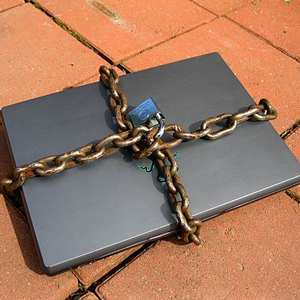 Always have a back up plan
In recent weeks, the computer world has been rocked by a ransomware attack “WannaCry” and a new warning that cybercriminals are embedding dangerous links in social media posts, a format where users may be less guarded.
One consistent message appears to be that cybercriminals are always adapting, looking for new ways to exploit users and systems. An attack may come through a spam email, tainted download, system weaknesses or something new.
Experts warn users to remain vigilant - always think before you click on a suspicious link. If an email looks fishy, verify sender information or delete the email. Once in place, ransomware freezes computers and demands payment to free the system and your files. Vigilance is good but human error is inevitable. Therefore, system and file back up is a safer bet to avoid disaster. Good virus and malware protection is also important. In the case of the WannaCry virus, some victims reclaimed their systems by installing new hard drives and restoring files from back up.
For ideas and advice see:
- Protecting Yourself from Ransomware and Cyberattacks - GPSolo, September/October 2016
- Going Solo Without Breaking the Bank - Wisconsin Lawyer, November 2014
- New Backup Options to Protect Your Work - GPSolo, July/August 2013
Library News - Kristina Martinez

Summer Tours & Classes
The Wisconsin State Law Library will host a number of tours this June. If you're interested in learning more about the services that WSLL provides, please contact Kristina Martinez, Outreach Services Librarian. Both WSLL and MCLL are offering classes throughout the summer. Visit the Classes page for more information and registration.
July Library Closures
The David T. Prosser Jr. State Law Library and Milwaukee and Dane County Law Libraries will be closed on Tuesday, July 4th. We will respond to questions and requests on Wednesday, July 5th.
To submit a question to the Wisconsin State Law Library while we are closed, you may call us at 608-267-9696 or Ask a Librarian online.
Other image sources: Raffle tickets, Locked computer, Sparklers
Comments Welcome!
- Contact Kristina Martinez
608-267-2202
Keep Up With Current News
- Weekly updates with Library Highlights
 Subscribe to our Newsletter RSS Feed


.jpg)